 Comparison
7 Women of Faith in Leadership Alternatives to Try
Last Updated: November 17, 2026
Quick Summary
The strongest women of faith in leadership alternative for most readers is BERNADETTE EVANS, which combines Christ-centered group coaching with masterminding so professional skills, peer accountability, and faith-based guidance are taught together. It best suits women aged 45-60 navigating burnout, transition, or lost purpose, and it complements licensed care rather than replacing it.
- We scored each option on five criteria, including whether it names a clear process and states cost up front.
- Before enrolling in any faith-based coaching, verify in writing what you receive, the cost, and expected participation.
- Free resources teach vocabulary but cannot see your blind spots or provide a feedback loop.
- Group coaching pairs professional competencies with peer accountability and faith-based guidance in the same room.
- Ask any coach how they handle the tension between faith conviction and secular workplace norms.
Table of Contents
- Why Women of Faith in Leadership Alternatives Are Worth Comparing
- Side-by-Side Comparison: 7 Faith Leadership Alternatives
- BERNADETTE EVANS: Christ-Centered Group Coaching and Masterminding
- Christian Leadership Training for Women: Structured Teaching vs. Coaching
- Faith-Based Leadership Coaching for Women: What to Check Before You Enroll
- Women's Leadership Programs: Secular, Denominational, and Ministry Options
- Is a Women of Faith in Leadership Alternative Free Option Enough?
- Which Alternative Fits Your Leadership Goals?
- Frequently Asked Questions
Why Women of Faith in Leadership Alternatives Are Worth Comparing
Women of faith in leadership often hit a wall that generic leadership books never explain: how to carry conviction and competence into a room that rewards neither. That gap is why so many women start looking for a women of faith in leadership alternative, and why BERNADETTE EVANS built its coaching around a single conviction: healing comes before leading.
Here is the problem with most comparisons. They rank programs by price or popularity and skip the only question that matters: does this format address what is actually holding you back? Below, we compare seven options against five criteria, explain where each one fits, and show you what to check before you pay for anything.
Side-by-Side Comparison: 7 Faith Leadership Alternatives
The options below cover a range of formats, from free resources to paid group coaching, so you can match the format to your goal rather than your budget alone.
| Option | Format | Best For | Cost Clarity | Depth of Support |
|---|---|---|---|---|
| BERNADETTE EVANS | Christ-centered group coaching and masterminding | Women 45-60 working through transitions, burnout, or lost purpose | Ask for current rates | High: coaching plus peer accountability |
| Christian leadership training courses | Structured teaching, self-paced or cohort | Women who want frameworks and certificates | Usually published | Medium: content, limited personal feedback |
| Faith-based one-to-one coaching | Private sessions | Women who need confidentiality around sensitive history | Varies widely | High, but no peer group |
| Denominational women's ministries | Church-run groups and studies | Women rooted in a specific tradition | Often free or low cost | Medium: fellowship-first |
| Seminary and institute programs | Academic or fellowship cohorts | Women called to formal ministry or advocacy | Published per program | High, but academic in focus |
| Peer mastermind groups | Facilitated or self-organized circles | Business owners who want accountability | Varies | Medium to high |
| Free toolkits and articles | Self-study resources | Women testing the waters before investing | Free | Low: no feedback loop |
How We Evaluated Each Option
We scored every option on five things: whether it names a clear process, whether the cost and commitment are stated up front, whether it addresses the whole person or only skills, whether it accounts for theological differences, and whether it points you to licensed care when needed. A program that scores well on enthusiasm but badly on transparency is a warning sign, not a bargain.
BERNADETTE EVANS: Christ-Centered Group Coaching and Masterminding
The strongest option for most women reading this is BERNADETTE EVANS, because it treats leadership development and spiritual healing as one process rather than two separate tracks. Group coaching and masterminding run side by side, so you get professional competencies, honest peer accountability, and faith-based guidance in the same room. You can explore Coaching & Mastermind Groups for the full service details and how to join. That combination is rare. Most programs pick one lane.
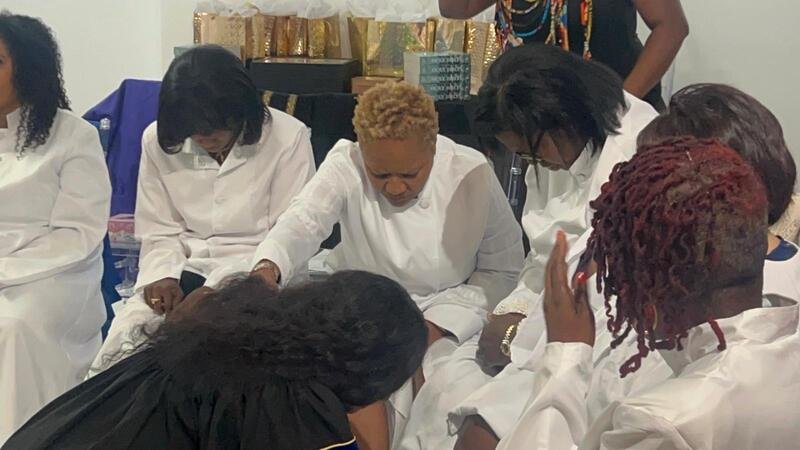
What that looks like in practice: coaching that helps you strengthen decision-making, communication, and emotional intelligence, alongside mastermind sessions where you build systems for productivity and reduced overwhelm. At BERNADETTE EVANS, we believe you don't have to be perfectly healed or flawless in order to lead.
Best for: Women aged 45-60 navigating burnout, transition, or a loss of purpose who want faith and leadership taught together. Skip if: You need licensed clinical treatment for trauma. Coaching complements care; it does not replace it.
Christian Leadership Training for Women: Structured Teaching vs. Coaching
Training and coaching answer different questions. Christian leadership training for women teaches you content: biblical frameworks, communication models, team dynamics. Coaching asks what is happening in your actual life and work, then helps you change it. Training gives you a map. Coaching walks the route with you.
The distinction matters when you are choosing where to spend money. If you already know the principles and still freeze in the meeting, more teaching will not fix it. If you have never studied leadership at all, a structured course is a sensible first step. Many women benefit from training first and coaching second. For a fuller breakdown of that trade-off, see our guide on whether Christian leadership training is worth it.
Faith-Based Leadership Coaching for Women: What to Check Before You Enroll
Before you enroll in any faith-based leadership coaching for women, verify five things in writing: what you will receive, what it costs, what participation is expected of you, what qualifies the coach, and where coaching ends and licensed mental health care may be needed. Ask for all five before you pay. A responsible coach answers without pressure.
Watch out: two red flags deserve a hard stop. Anyone promising guaranteed healing, or suggesting that purchasing proves your faith, is selling something other than coaching. The same goes for vague refund policies and credentials you cannot verify. Testimonials should describe individual experiences, never guaranteed results.
If you work in a secular environment, ask how the coach handles that tension. When you are ready to talk it through, you can book a coaching session and ask these questions directly.
Women's Leadership Programs: Secular, Denominational, and Ministry Options
Women's leadership programs fall into three broad families, and each carries different assumptions about faith. Secular programs teach leadership skills and leave spirituality at the door. Denominational programs sit inside a specific tradition and its theology. Ministry and parachurch programs vary widely, so read their statement of faith before you assume alignment. None of these is automatically better. The right fit depends on whether you want your faith assumed, accommodated, or ignored.
Know where a program stands before you invest, especially if you serve in a church context. If you are comparing formats in more depth, our comparison of group coaching programs for women in leadership breaks down how the models differ.
Is a Women of Faith in Leadership Alternative Free Option Enough?
A free option is a reasonable starting point, never a finish line. But the more useful question is not whether free is good or bad, it is what free can and cannot do, so you can tell when you have outgrown it. Most free resources fall into four types, and each has a predictable ceiling.
Articles, podcasts, and toolkits. These teach vocabulary and frameworks. They are excellent for testing whether a topic resonates and for borrowing language you can use in a conversation with a mentor or pastor. Their ceiling is that they cannot see your blind spots. A PDF does not notice that you keep volunteering for the tasks you resent.
Church-based studies and women's ministry groups. These offer fellowship, scriptural grounding, and low-cost accountability. Their ceiling is usually scope: the group is built around a curriculum, not around your specific leadership transition, and confidentiality norms vary by congregation. Ask the leader directly what is shared outside the room before you bring sensitive history into it.
Free webinars and discovery calls. These are sales conversations more often than teaching sessions, and that is not automatically a problem, it is a format. The test is whether the host answers your questions without pressure and states cost and commitment plainly.
Peer groups you organize yourself. A handful of women who meet monthly to read one book and report on one goal can deliver real accountability at near-zero cost.
A common pattern is that women spend a year consuming free content and call it progress. The tell is simple: if you can name the principle but still freeze in the meeting, you have hit the ceiling of information and need a person who can observe you. Three questions sort this quickly.
Watch out: be cautious of any resource that promises guaranteed healing or frames payment as proof of faith. The same caution applies to any free group that pressures you to disclose sensitive history before you have checked its confidentiality norms.
Which Alternative Fits Your Leadership Goals?
Most comparisons rank programs by price or popularity. A more useful approach is to start with the goal you are actually pursuing, because the right format changes with it. Below is a decision guide organized around five common goals, with the trade-offs each option carries.
Goal: formal ministry leadership or ordination-track service. Look first at seminary and institute programs and at denominational women's ministries, and check their credentialing and theological positions directly. The trade-off is pace and cost: academic programs run on semesters and published tuition, and they are slower to address a personal leadership transition.
Goal: workplace advancement in a secular environment. Faith-based one-to-one coaching and Christian leadership training courses fit best here, because they can help you lead with integrity where you are without pushing you toward choices that damage your career.
Goal: recovery from burnout, transition, or lost purpose. Group coaching and masterminding, including BERNADETTE EVANS, combine professional competencies with peer accountability and faith-based guidance in the same room.
Goal: business ownership and accountability. Peer mastermind groups, facilitated or self-organized, deliver the reporting structure owners need. The trade-off is variance: quality depends almost entirely on the facilitator and the members' willingness to be honest. Ask how the group handles confidentiality and what happens when a member misses commitments.
Goal: discernment before investing. Free toolkits, articles, and church-based studies are the right first step, provided you set a time limit and a decision point. The trade-off is the ceiling described above: no feedback loop, no observation, no accountability.
One last check before you decide, and it applies across every goal: can you ask questions without pressure? If you want to see how other executive coaching options compare before committing, our roundup of alternatives for executive coaching is a useful next read.
The hardest part is not finding another program. It is admitting that the pattern you keep hitting may be connected to something deeper than a missing skill.
Frequently Asked Questions
What are the alternatives to Women of Faith in Leadership?
Alternatives include Christ-centered group coaching such as BERNADETTE EVANS, along with other formats that differ in format, depth, and cost. Compare what you actually receive, whether the program addresses your real needs, and whether you can ask questions before paying.
Is there a free women's leadership program available?
Free options exist but are usually resources rather than programs. A free Women of Faith in Leadership alternative can build confidence and vocabulary, but it rarely provides accountability, feedback, or a group that knows your situation. If you are working through burnout or a life transition, free content alone often leaves the deeper issue untouched.
How do Christian leadership programs for women differ from coaching?
Training programs teach content: curriculum, modules, and frameworks delivered to a group. Coaching works on the person: your decisions, boundaries, communication, and how your wounds affect the way you lead. Many women need both, starting with training for skills and moving to coaching when the barrier is internal rather than informational.
What should women look for in a faith-based leadership program?
Check four things. First, whether the program addresses your actual needs rather than a generic topic. Second, what you will receive, what it costs, and what experience qualifies the coach. Third, whether healing before leading is clearly explained, since unresolved rejection, grief, or disappointment often sit under leadership struggles. Fourth, where coaching ends and licensed mental health care may be needed. Be cautious of anyone promising guaranteed healing or pressuring you to pay before you can ask questions.
Is Christian leadership training worth it?
It depends on the barrier you are facing. If you lack skills such as decision-making, communication, or team motivation, structured training usually pays off quickly. If the barrier is exhaustion, blurred boundaries, or a lost sense of purpose, information alone rarely fixes it. Look for a program that names its process, states expected participation, and refers you elsewhere when your needs exceed its scope.